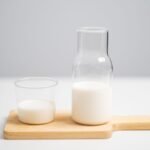
Most Lithuanian recipes use ordinary ingredients. A few are hard to find in the US, and these substitutes cover them. Each note tells you how close the swap is, so you know what to expect. Where an ingredient is the same in both countries, I say so, because the name may differ.
Last updated: November 9, 2026
Dairy
Lithuanian ingredients
US substitute
Notes
Recommended
Kefir (kefyras)
Plain, unsweetened kefir, or buttermilk
Close match with kefir, which most US supermarkets sell. Buttermilk is thinner and milder, so add less water to cold soups at first. Thinned plain yogurt also works but is thicker.
Sour cream (grietinė)
Full-fat sour cream
Close match. Lithuanian sour cream is often 20 to 30 percent fat, and US sour cream is about 18 to 20 percent. Avoid light or fat-free versions, which can curdle in hot dishes.
Curd cheese (varškė)
Farmer’s cheese, pot cheese or dry-curd cottage cheese
Good match. If you use regular cottage cheese, drain it in a sieve and press out the liquid. Ricotta is wetter and sweeter, so drain it well and expect a softer result.
Soured milk (rūgpienis)
Buttermilk
Good match for pancakes, baking and cold soups.
Butter (sviestas)
Regular or European-style butter
Close match. European-style butter has slightly more fat and a richer taste.
Aged hard cheese (such as Džiugas)
Parmesan or aged Gouda
Rough match. Parmesan is closest in texture and saltiness. Aged Gouda is milder and nuttier.
Bread, grains and flour
Lithuanian ingredients
US substitute
Notes
Recommended
Dark rye bread (ruginė duona)
Dense dark rye from an Eastern European or Baltic bakery or deli
Good match if you pick the right loaf. Look for rye flour as the first ingredient and a dense, slightly sour crumb. Soft deli rye with seeds is a different bread, and pumpernickel works if you cannot find a dark rye.
Rye flour (ruginiai miltai)
Dark or whole rye flour
Close match. Look in the baking aisle or at a health food store. Light rye flour gives a milder flavor.
Buckwheat groats (grikiai)
Kasha (roasted buckwheat groats)
Close match, since Lithuanian buckwheat is usually toasted. Raw, unroasted groats taste milder.
Pearl barley (perlinės kruopos)
Pearl barley
Same ingredient. Most US supermarkets sell it.
Potato starch (bulvių krakmolas)
Potato starch
Same ingredient. Most US supermarkets sell it.
Meat and fish
Lithuanian ingredients
US substitute
Notes
Recommended
Smoked bacon or smoked pork belly (šoninė)
Slab bacon or thick-cut smoked bacon
Good match. Ask the butcher counter for slab bacon, then cut it into cubes.
Rye flour (ruginiai miltai)
Salt pork or fatback
Rough match. Salt pork has some meat in it. Rinse it if it tastes too salty.
Smoked sausage (dešra)
Kielbasa or another coarse smoked pork sausage
Rough match. An Eastern European deli will have the closest options.
Pearl barley (perlinės kruopos)
Jarred marinated or pickled herring
Good match. Look in the refrigerated section of well-stocked supermarkets and delis.
Vegetables, herbs and pantry
Lithuanian ingredients
US substitute
Notes
Recommended
Beets (burokėliai)
Fresh red beets, or plain pre-cooked vacuum-packed beets
Good match. Ask the butcher counter for slab bacon, then cut it into cubes.
Dried mushrooms (such as baravykai)
Salt pork or fatback
Close match. Soak them in hot water, then strain, and keep the soaking liquid for soups and sauces.
Sauerkraut (raugintų kopūstų)
Refrigerated or barrel-style sauerkraut
Rough match. An Eastern European deli will have the closest options.
Horseradish (krienai)
Fresh horseradish root, or plain jarred horseradish
Good match. Avoid “creamy” horseradish sauce.
Caraway seeds (kmynai)
Caraway seeds
Same ingredient. Do not swap in cumin, which tastes different.
Potatoes (bulvės)
Russet potatoes for dumplings, pancakes and kugelis, and Yukon Gold for boiling
Good match. Russets are starchier, and that matters in dough.
Where to shop
Eastern European, Polish, Russian or Baltic delis and grocery stores. These often carry farmer’s cheese, dark rye bread, kefir, herring, sauerkraut and kielbasa.
The international aisle and refrigerated section of a large supermarket.
Butcher counters for slab bacon and salt pork.
Bulk spice shops and Indian groceries for poppy seeds and caraway.
Kitchen Tools & Essentials
You don’t need a fancy kitchen to cook Lithuanian cuisine. Most of these recipes rely on a few simple tools: a sturdy box grater and a clean kitchen towel for potato dishes like cepelinai and kugelis, a wide heavy pot for simmering, a good skillet for frying bacon and onions, and a kitchen scale, because every recipe here lists grams first. A few dishes, like šakotis, need special equipment, and I point those out in the recipe. Here’s the short list of what I actually use and what’s worth buying.